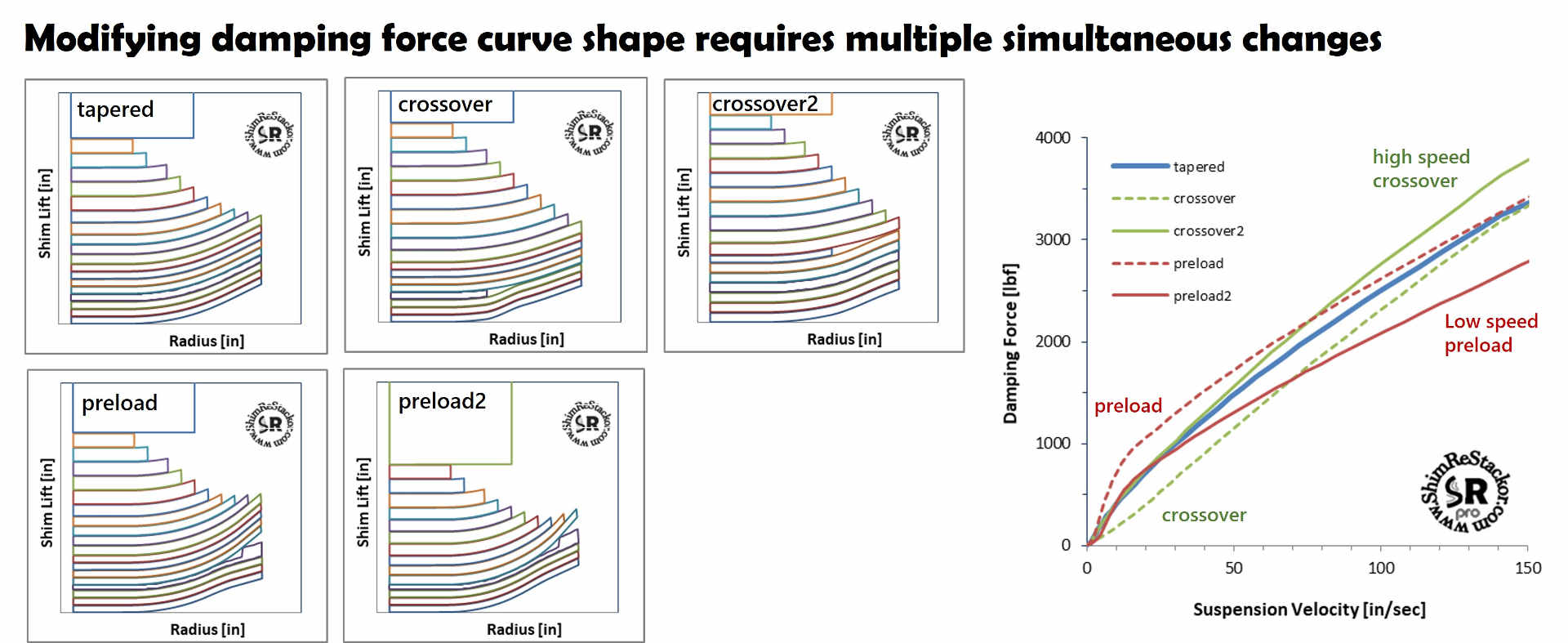
There are no simple algebraic relationships for tuning damping force curve shapes. Damping force curves are simply tuned by hacking around on the shim stack configuration until the desired low speed, high speed and damping force curve has been achieved.
The capability of Shim ReStackor to rapidly compute complex shim stack configurations and the resulting damping force curve makes tuning simple, easy and intuitive.
- Adding shims makes damping stiffer
- Removing shims does the opposite
- Crossover
- Softer low speed
- Stiffer high speed
- RIng shim
- Stiffer low speed
- Softer high speed
Shim stack theory
Tapered shim stacks produce a digressive damping force curve. Adding a crossover reduces low speed damping making the damping force curve progressive. Ring shims preload the stack increasing low speed damping which makes the damping force curve more digressive.
Those three features control a wide range of damping force curve shapes giving control of the damping force curve across the entire range of suspension velocities (linky more).
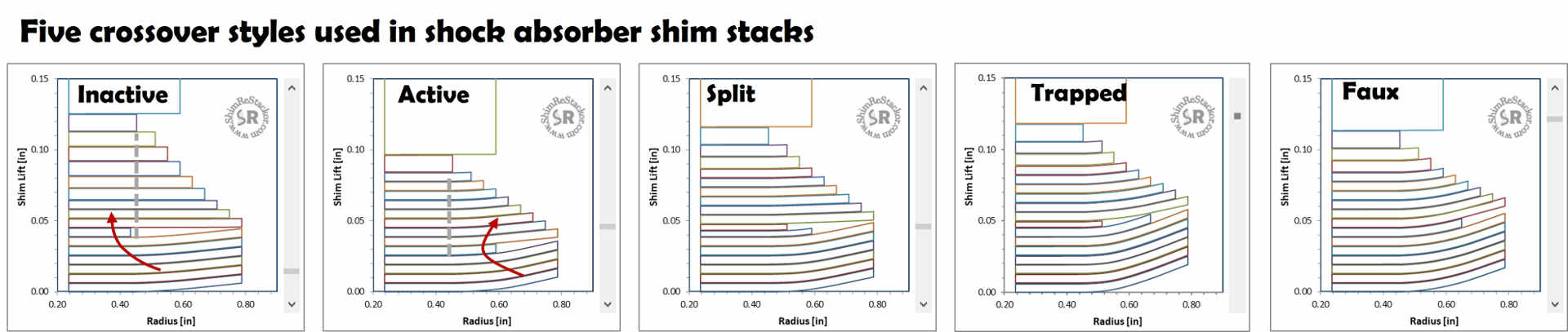
Crossover gaps
There are five different crossover styles. Each style produces a slightly different damping force curve shape.
Fine tuning each style gives control of both low and high speed damping (more).
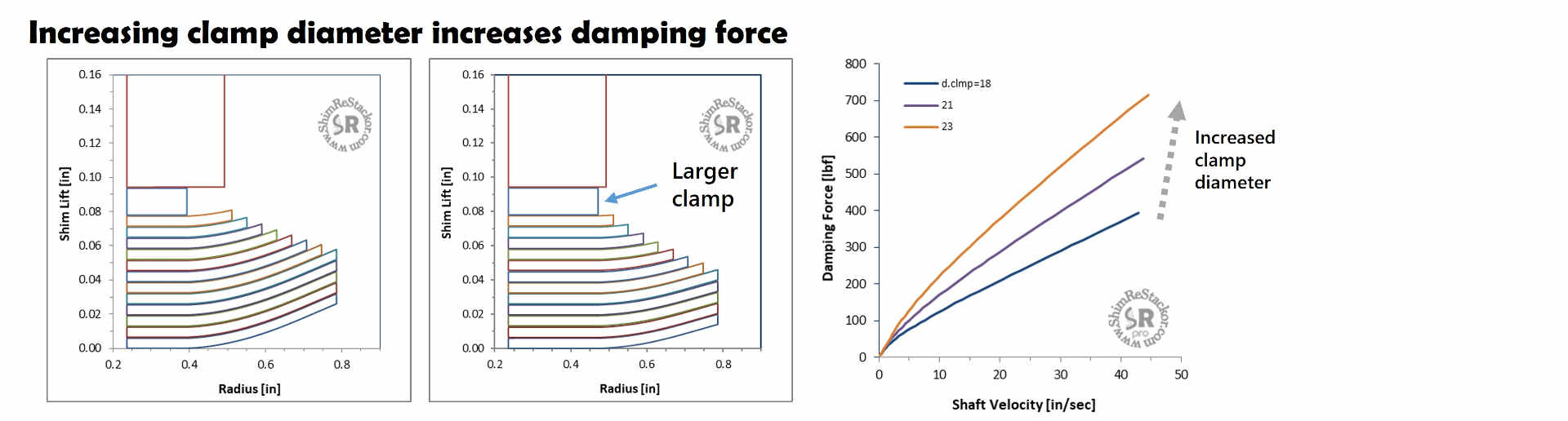
Clamp shim
Increasing the shim stack clamp diameter increases the shim stack stiffness and damping force.
Clamp diameters larger than the valve port inside diameter physically close off a portion of the valve port which can create larger than expected increase in damping force (more).
Stack tapper
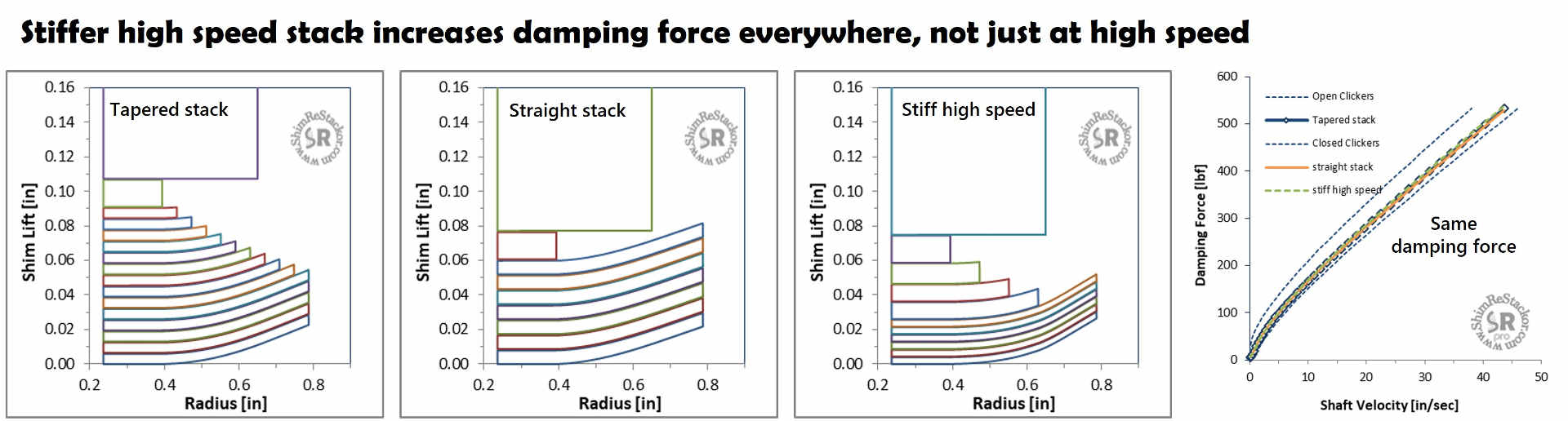
Shim stack taper controls the bend radius of the face shims and helps prevent kinking of the shims at high lift.
Stack taper has little influence on the shape of the damping force curve and that fact is often poorly understood (more).
Ring shim preload
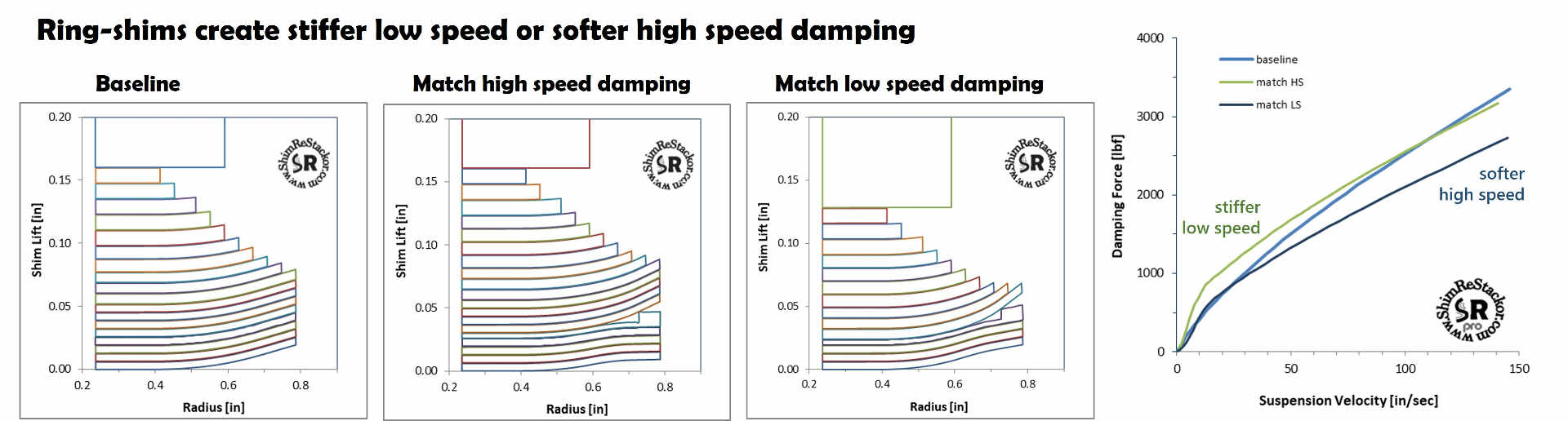
Ring shims preload the shim stack holding the face shims closed at low speed and increase low speed damping.
Ring shims can also be tuned the other way around to soften high speed damping (more).
Shim stack float
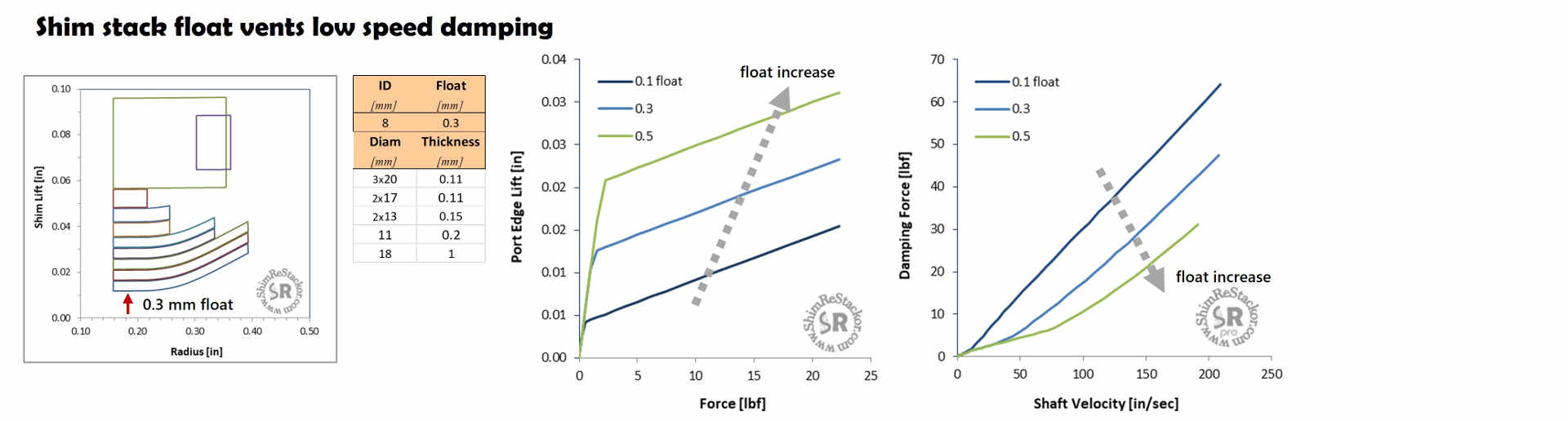
Stack float allows the shim stack to physically lift off the valve face and vent low speed damping.
Float delays the suspension speed where the shim stack damping force kicks in making the damping force curve more progressive (more).
Leaf spring stack
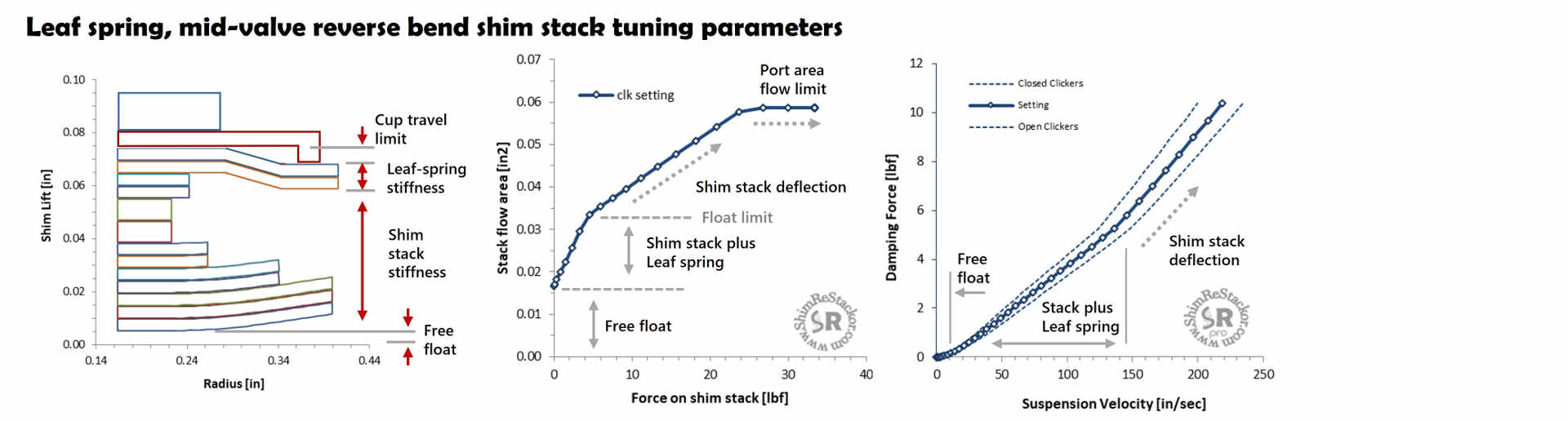
A reverse bend “leaf-spring” bends backwards into the shim stack cup and controls opening of the shim stack float.
Leaf-spring stiffness controls low speed damping (more).
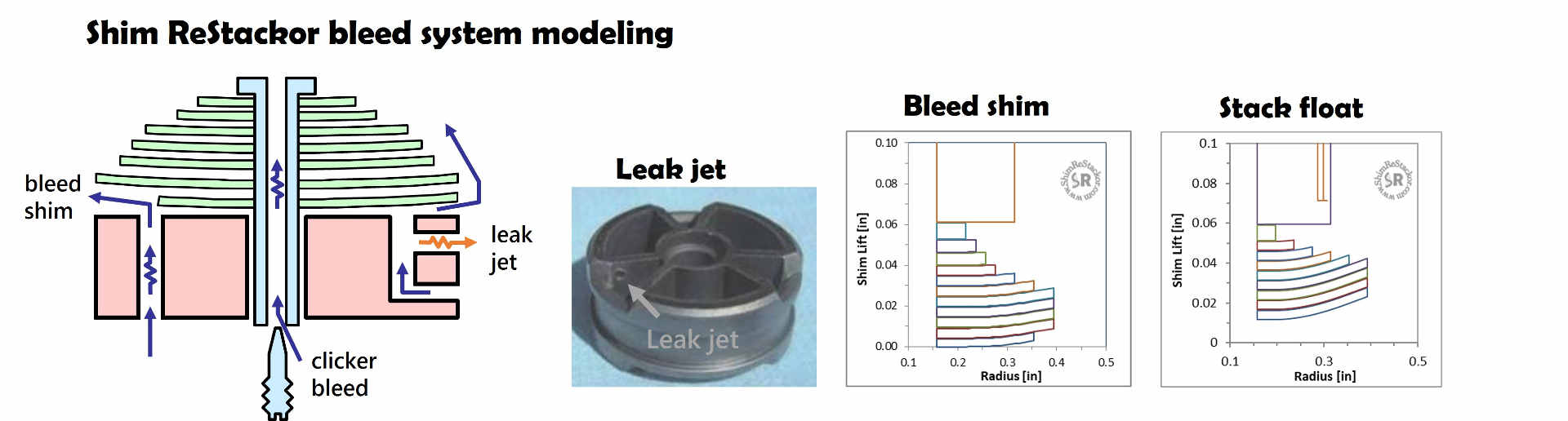
Bleed systems
Bleed systems control low speed damping. Shim ReStackor models clicker bleed, leak jets, bleed shims, notched bleed shims and shim stack float.
The efficiency of each bleed system is slightly different and effected by oil viscosity (more).