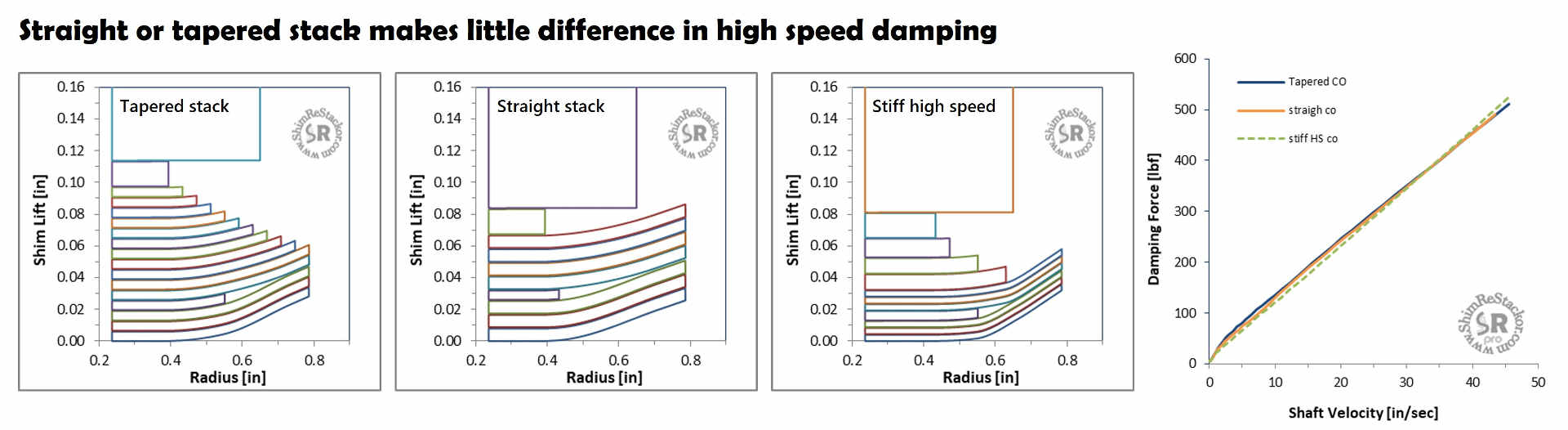
The tapered section of the shim stack is often referred to as the high speed stack. The notion of the high speed stack controlling high speed damping is a widely spread myth.
A tapered stack, straight stack or stiff high speed stack all produce the same damping force curve.
Changing the clamp diameter or high speed stack stiffness clearly changes the damping force. But, it does not change the shape of the damping force curve or the split between low and high speed damping.
Tapered stacks smooth bend radius
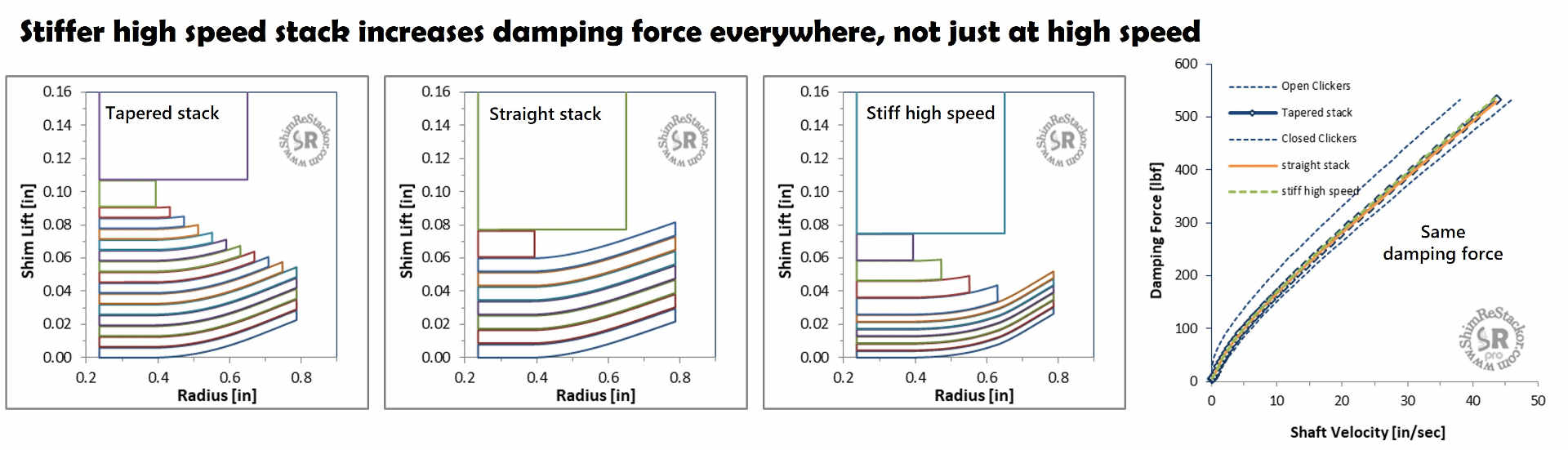
Shock absorbers use tapered shim stacks to supply more support at the shim center and smooth the bend radius on the sharp corner of the shim stack clamp or crossover shim. at the shim stack clamp.
Smoothing the bend radius helps to avoid overstressing the shims which can become permanently bent when pushed beyond the yield strength.
Crossover shim stacks
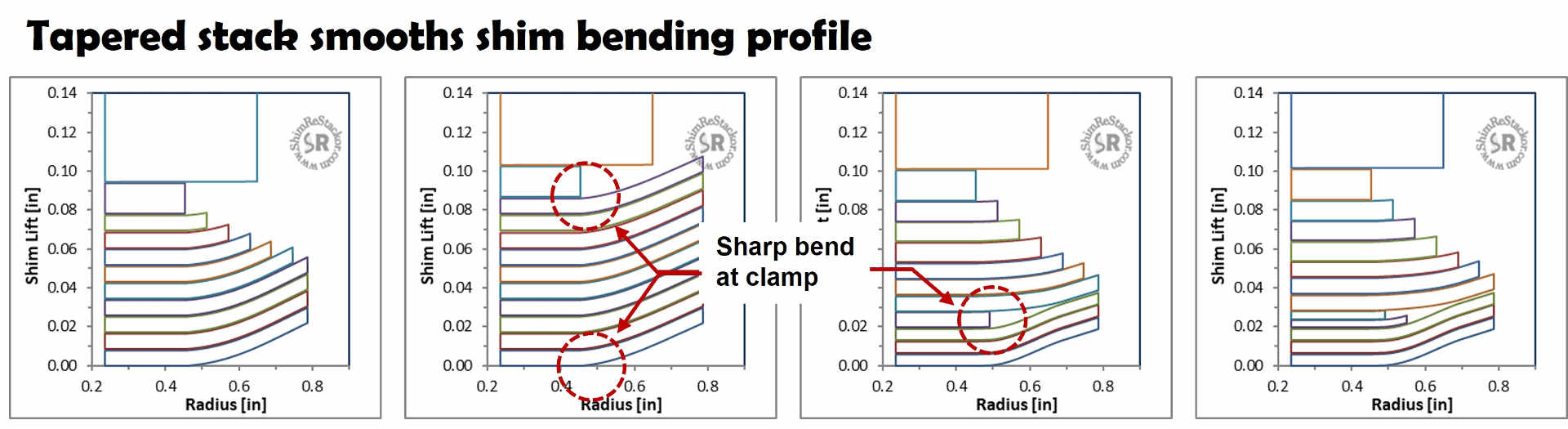
Crossover shim stacks are the special case where the high speed stack makes a difference. Face shims control low speed damping and the combined high speed stack plus face shim stiffness control high speed damping.
For the straight and stiff high speed stack example above, installing a 20.15 mm crossover shows each stack produces a different damping force curve due to the differences in high speed stack stiffness.
Crossover tuning
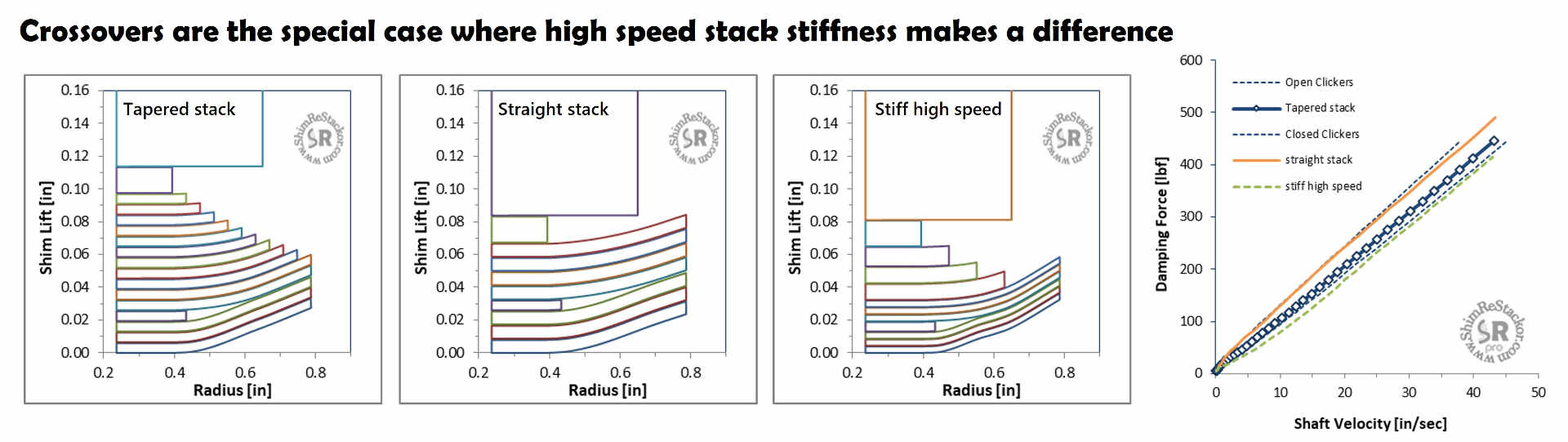
However, the crossover diameter in each configurations can be retuned to show the damping force is about the same for all three setups despite the differences in high speed stack stiffness.
The example demonstrates there are often multiple shim stack configurations producing nearly identical damping force curves. The final configuration used is often simply based on the shims on hand at the time the shock was setup.