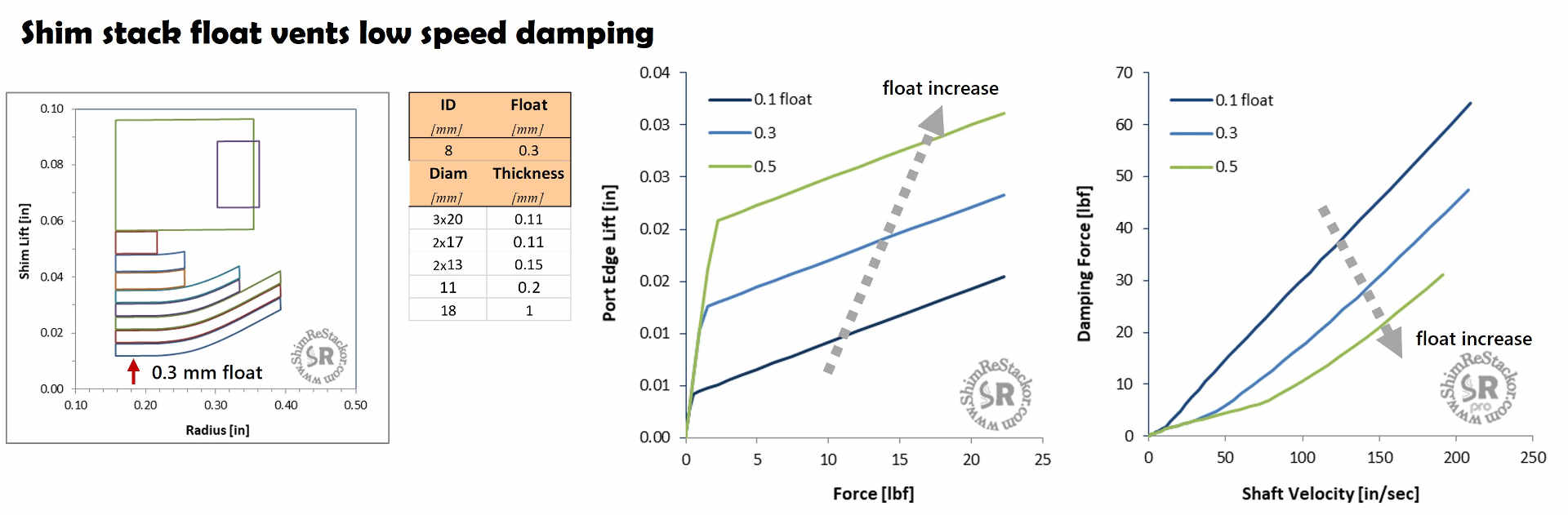
Shim stack float, entered in cell D6, allows the shim stack to physically lift off the valve face similar to a spring loaded check valve.
The check spring stiffness and preload entered in cells N6 through P6 control the cracking pressure. When the shim stack lift reaches the float limit, the shim stack hits a hard stop. Beyond that point damping force is controlled by deflection of the shim stack.
Float check spring
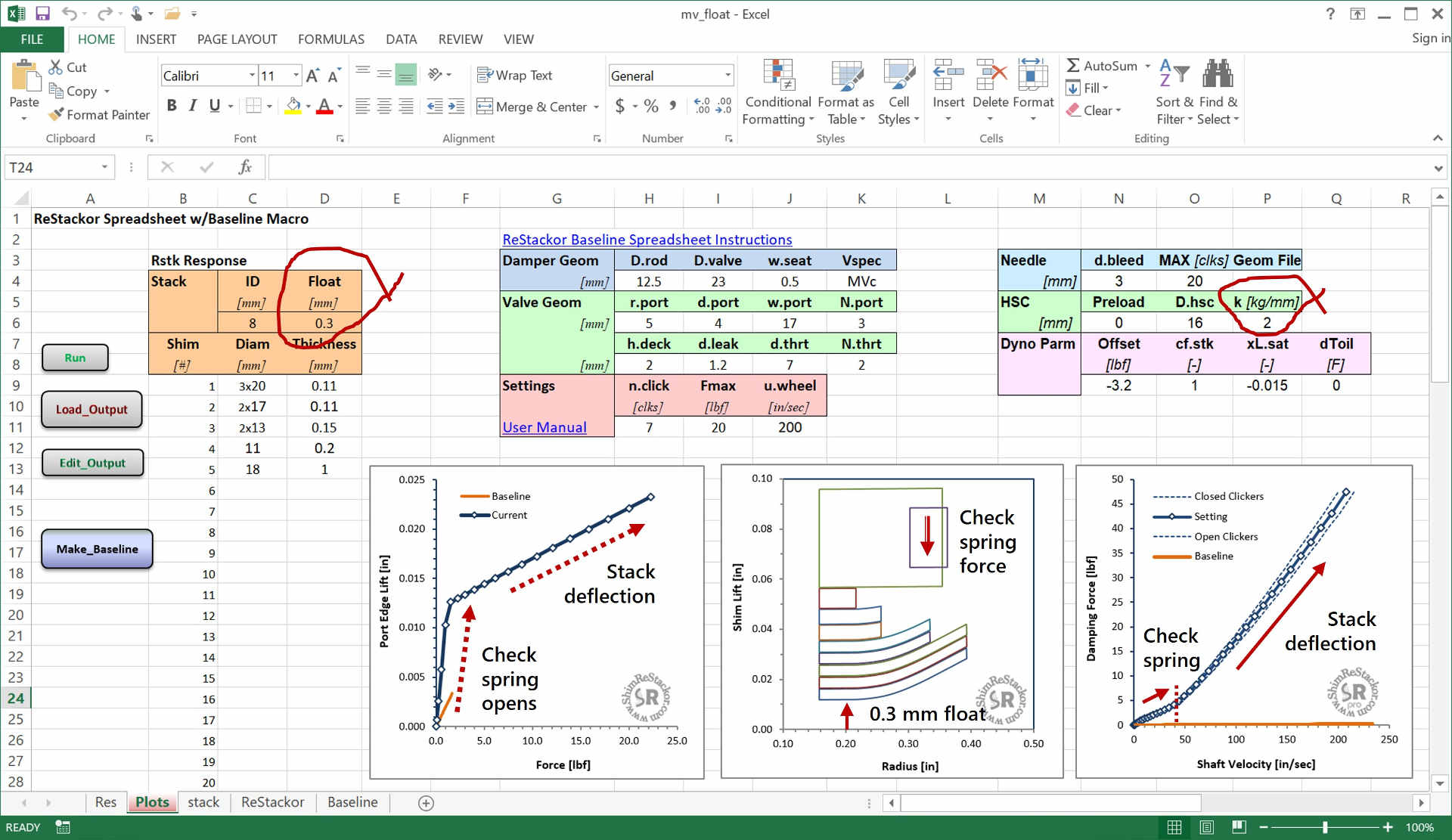
Shim ReStackor draws a small box at the shim diameter where the check spring force is applied to the shim stack.
The check spring force can be applied at the outside edge of the face shim, an arbitrary diameter along the stack taper, or on the shim stack clamp washer which is the typical configuration for a compression adjuster.
Low speed damping
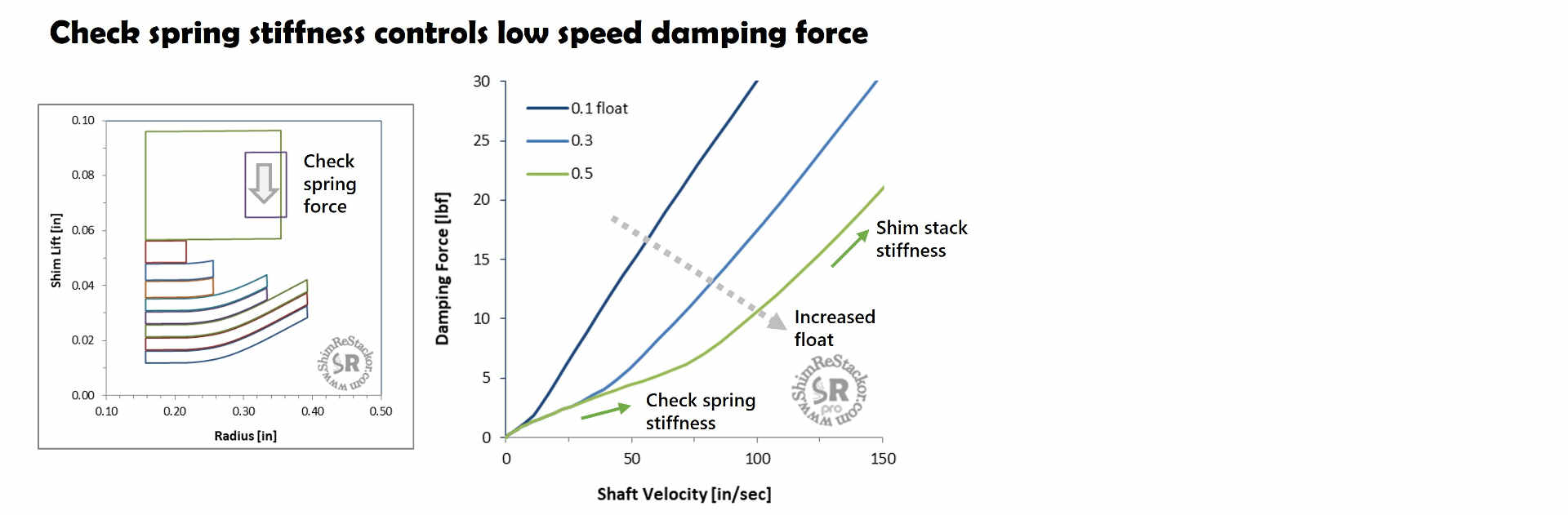
SLow speed damping is controlled by the check spring stiffness and preload. Spring preload controls the cracking pressure and shock shaft velocity where float cracks open.
Stiffness of the check spring controls the rate of float opening and damping force through the low speed range. The shim stack hits a hard stop at the end of float travel. Beyond that point the stiffness of the shim stack controls the stack edge lift and damping force.
Float tuning
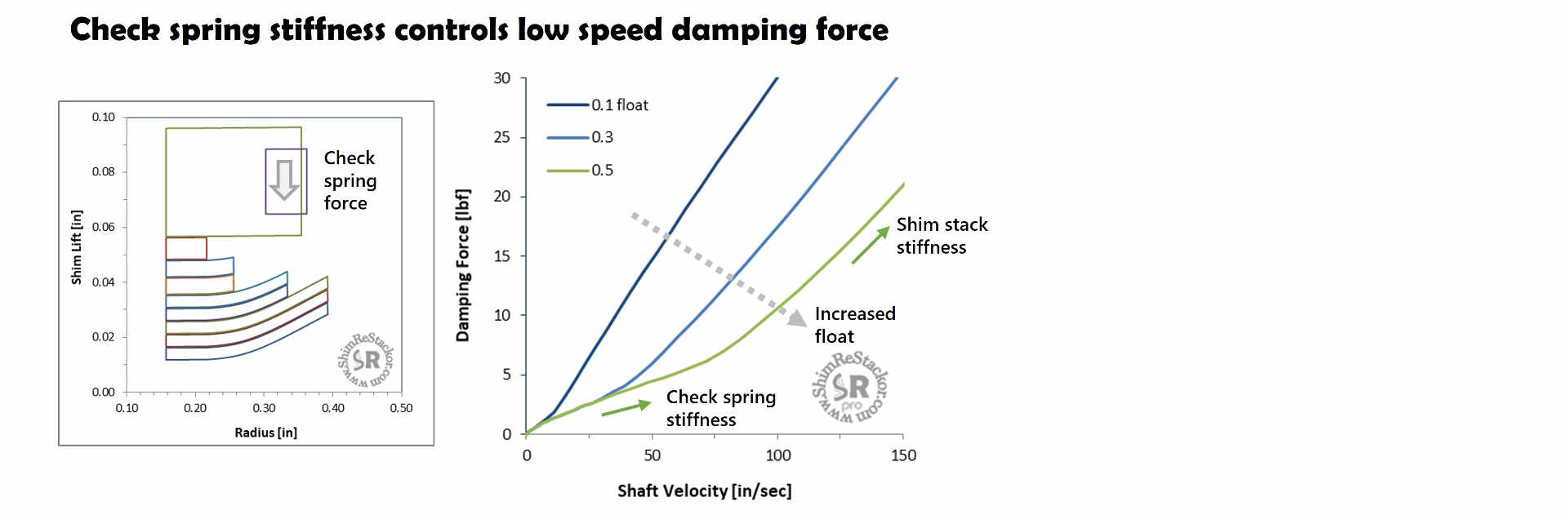
The combination of float height, check spring stiffness, check spring preload and clicker bleed gives detailed control of damping force through the low speed range.
Each parameters is tunable in Shim ReStackor calculations giving detailed control of the damping force curve shape.